
It's one of the most common questions we get at the counter: what's the difference between a striploin and a ribeye? Both are premium steaks. Both come from the back of the animal. Both deserve a place on your grill.
But they're not the same and knowing the difference means you'll always pick the right steak for the right occasion.
Where Do These Cuts Come From?
The ribeye comes from the rib section (ribs 6–12) and is renowned for its heavy marbling. Think those white threads of intramuscular fat that melt during cooking and create an incredibly rich, juicy bite. It's the indulgent choice.
The striploin (also called the New York strip) comes from the short loin, just behind the ribs. It has less marbling than a ribeye, but more than a tenderloin, and a firmer, more defined texture that many steak lovers prefer. It's a bolder, beefier flavour.
Texture and Flavour Differences
Ribeye: buttery, rich, and luxurious. The fat content keeps it moist even if you cook it slightly past medium. It's forgiving and deeply flavourful.
Striploin: firm, beefy, and satisfying. It has a more pronounced chew and a cleaner finish. The fat cap along the edge adds flavour without making the whole steak feel heavy. It's the steak for people who want to taste the beef, not just the fat.
Which One Should You Choose?
Choose the ribeye when: you want maximum richness, you're grilling for someone who loves a juicy, heavily marbled steak, or you're celebrating something worth celebrating.
Choose the striploin when: you want bold beef flavour with a cleaner profile, you're cooking for a crowd that prefers something less fatty, or it's a Tuesday and you still want something great.
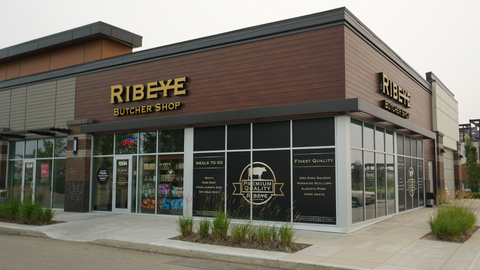
Both cuts shine with simple seasoning. Both benefit from a hot pan or a hot grill. And both are cut fresh daily at Ribeye Butcher Shop.
Come in and ask our butchers, we'll help you decide.